Soothing
Lavender
also known as Lavandula angustifolia, lavender oil, lavender flower extract, lavender water
The most calming-sounding word on a label, and one of the few ingredients in this library that is registered as a fragrance rather than an active.
What it is
Lavender in cosmetics is at least three different ingredients wearing one word. Lavandula Angustifolia Oil is the steam-distilled essential oil — roughly 50 percent linalyl acetate and 35 percent linalool, two compounds that together make up about 80 percent of it. Lavandula Angustifolia Flower Extract is a solvent extract, carrying meaningfully less linalool than the oil. Lavandula Angustifolia Flower Water is the distillation water, weaker again. And Lavandula Hybrida — lavandin — is a different hybrid plant, cheaper, higher in camphor, and frequently what is in a product that simply says "lavender" on the front. The EU ingredient database registers the flower extract under five functions: cleansing, deodorant, masking, refreshing and tonic. Four of those five are about smell. That is the honest starting point for this page.
What it actually does
Its documented role in a formula is scent, and specifically masking — covering the smell of everything else in the bottle. Lavender is associated in traditional and aromatherapy use with calm and relaxation, and there is published in-vitro work on antimicrobial activity, but neither of those establishes that lavender does anything for your skin barrier at the concentration a cosmetic uses. The better-evidenced literature runs the other way. Linalool and linalyl acetate both autoxidise on contact with air, and the oxidation products are strong contact allergens — which means an opened bottle becomes more sensitising over its life, not less. A Japanese patch-test series tracked lavender sensitivity rising from 1.1 percent in 1990 to 8.7 percent in 1997 and 13.9 percent in 1998, alongside a boom in lavender products. Separately, lavender oil has shown cytotoxic effects in cell studies at concentrations as low as 0.25 percent, with 0.125 percent treated as the acceptable ceiling. None of that makes lavender dangerous in a well-made product. It does mean the calm is in the smell, not in the skin.
Why K-beauty uses it
Two things worth knowing if you shop Korean. First, in our catalog the word is overwhelmingly a colour, not an ingredient — of 68 live products with "lavender" in the name, nearly all are makeup shades (blushes, eye palettes, lip tints) or colour-correcting primers where lavender is a purple that cancels yellow tones. Second, and more useful: of the 499 products where we hold the full ingredient list, 31 contain a Lavandula ingredient, and not one of them says lavender on the front. It is sitting quietly in centella creams, retinol serums and purifying toners as a masking note. So the lavender you are most likely to be putting on your face is the lavender you did not choose. Note also that from 31 July 2026 the EU requires linalool to be declared on-label above 0.001 percent in leave-on products and 0.01 percent in rinse-off, under the expanded 82-allergen list in Regulation (EU) 2023/1545 — so European-market labels are about to get more informative about exactly this.
Best for
- Sensory experience
- Fragranced routines
- Body care
- Skin with no fragrance reactivity
Not ideal for
- Compromised barrier
- Known fragrance allergy
- Active retinoid or acid routines
- Anyone shopping for a soothing active
- Eczema-prone or reactive skin
Pairs well with
Centella asiatica
pairs wellFrequently in the same formula — worth knowing centella is the one with the evidence behind it.
Panthenol
pairs wellNo interaction; panthenol is the better answer if soothing is what you actually wanted.
Ceramides
pairs wellA solid barrier base makes fragrance easier for most skin to tolerate.
Oat
pairs wellLayer freely — though oat is doing the soothing, not the lavender.
Use with care
Retinol
use cautionA fragrance allergen on skin a retinoid is already stressing.
Retinal
use cautionSame reasoning as retinol — a retinoid night is not the time for fragrance.
AHA (Glycolic & Lactic Acid)
use cautionFreshly exfoliated skin absorbs and reacts to fragrance more readily.
→ If you use both, keep them in separate steps or separate days.
BHA
use cautionSame as AHA — exfoliation plus a declared allergen raises the odds of a reaction.
Tea Tree
use cautionTwo essential oils in one routine is two sets of oxidation-prone allergens.
→ Pick one.
Not "avoid at all costs" — most K-beauty routines get away with these combos by splitting AM/PM or alternating nights. The caution is about how you layer, not whether you use them.
Routine placement
- Where it lives
- Cleanser · Toner · Moisturizer
- AM/PM
- AM & PM
- Frequency
- As the format directs
How to use it
There is nothing to ramp up and no timing to manage. The practical advice is about position and dose: lavender in a cleanser that is on your face for ninety seconds is a different proposition from lavender in a leave-on cream. Check where it sits on the ingredient list — near the end, alongside or inside "fragrance/parfum", it is a scent decision; high on the list in a facial product, ask why. And treat an old bottle of anything lavender-heavy with more caution than a new one, because the oxidation that creates the allergens happens on the shelf.
The Plug verdict
Lavender is the clearest example in this library of a word doing work the molecule does not. It is registered as a masking ingredient, its two main constituents are declared allergens that get more sensitising as the bottle ages, and the patch-test record got worse as the trend got bigger. We are not telling anyone to throw out a product they like and tolerate — a lavender note in a body oil or a cleanser is a small, reversible decision and it is allowed to just smell nice. But we would not pay for lavender as a skincare active, we would not put it on a barrier that is already struggling, and if you are buying for calm skin rather than a calm smell, centella or panthenol is the same shelf and a much better argument. The interesting finding on this page is not about the products that advertise lavender. It is that most of the lavender in a Korean routine is unlabelled on the front and doing a job you did not know you were buying.
Products featuring lavender
4 productsEditorially picked products where lavender is the hero — ranked by real value across authentic retailers.
Products with lavender
4 products
KAINE
Lavender PDRN Revitalizing Toner

Aromatica
Serene Body Oil Lavender Marjoram

JAYJUN
Lavender Tea Eye Gel Patch
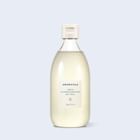
Aromatica
Serene Body Wash Lavender Marjoram
We match by ingredient mentions in product copy from our authentic retailers. If we missed a product you know contains lavender, let us know.
Related ingredients
Tea Tree
aka Melaleuca alternifolia leaf oil, TTO
The most common plant antimicrobial in Korean acne products — effective, well-studied, and the one ingredient here where the concentration genuinely matters for safety, not just results.
Beginner-safe
Centella asiatica
aka Cica, tiger grass
The K-Beauty soothing standard — calms redness, speeds barrier recovery, and quiets reactive skin.
Beginner-safe
Panthenol
aka Pro-vitamin B5
Quiet workhorse — hydrates, soothes, and speeds the skin's recovery from almost anything.
Beginner-safe
Frequently asked
- What does Lavender do?
- The most calming-sounding word on a label, and one of the few ingredients in this library that is registered as a fragrance rather than an active.
- Is Lavender good for beginners?
- Yes — Lavender is considered beginner-friendly in most K-beauty routines.
- Is Lavender safe for sensitive skin?
- Lavender can be too active for sensitive skin — patch test and start with a low frequency.
- How do you use Lavender?
- There is nothing to ramp up and no timing to manage. The practical advice is about position and dose: lavender in a cleanser that is on your face for ninety seconds is a different proposition from lavender in a leave-on cream. Check where it sits on the ingredient list — near the end, alongside or inside "fragrance/parfum", it is a scent decision; high on the list in a facial product, ask why. And treat an old bottle of anything lavender-heavy with more caution than a new one, because the oxidation that creates the allergens happens on the shelf.