Soothing
Calendula
also known as Pot marigold, Calendula officinalis, marigold extract
A genuinely gentle, genuinely old botanical soother — and the one plant extract on this list with a real allergy caveat attached, because it is a daisy.
What it is
Calendula officinalis — pot marigold, the orange garden annual — processed into one of several quite different cosmetic materials. Worth separating two things straight away. First, this is not the ornamental "marigold" sold at garden centres, which is Tagetes, a different genus with a different (and more allergenic) profile. Second, "calendula" on a front label does not tell you which preparation is inside. The flower extract is a water or glycol extract and by far the most common. The flower oil is something else entirely: an oily macerate, made by steeping flowers in a carrier oil — usually sunflower, sometimes soy — so a large share of what you are buying is the carrier. There is also a flower water (distillate, mostly in toners) and a seed oil, which is a fatty oil rather than an extract. The EU cosmetic ingredient directory carries roughly fourteen separate INCI designations for calendula preparations, which is a lot of different things sharing one word on a box. The constituents credited with the activity are the triterpenoid faradiol esters, flavonoids including quercetin, isorhamnetin and kaempferol, and the carotenoids — lutein and lycopene-type pigments — that give the flower and the extract their orange colour.
What it actually does
Calendula is associated with calming and comforting irritated skin, and it has been used that way for a very long time. The evidence behind that association is worth laying out honestly, because it is not what the length of the tradition implies. In the lab it does something measurable: a 2021 study in Cosmetics put a commercial calendula oil onto LPS-stimulated mouse macrophages and saw dose-dependent suppression of nitric oxide production, reaching about 50% inhibition at 147 µL/mL with no loss of cell viability, and significant effects above 49 µL/mL. That is one commercial sample, one cell line, no skin model, and a dose figure that cannot be converted into a percentage in a cream. In animals, supercritical-CO2 calendula preparations reduced croton-oil ear oedema in mice, with the size of the effect tracking the faradiol monoester content — which is at least a plausible mechanism rather than a vibe. The human data is where it gets interesting. The best-known trial is a 2004 Phase III in the Journal of Clinical Oncology: breast-radiotherapy patients given calendula ointment had less grade 2-or-worse dermatitis than those given trolamine, 41% against 63%. That looks decisive until you read the follow-up. A later randomised trial of 411 patients compared calendula cream against plain aqueous cream and found no significant difference in severe skin reactions, quality of life, pain, itching or burning. Reviewers of this literature have pointed out that the 2004 result may say more about trolamine being a poor comparator than about calendula being good, and the MASCC skin-toxicity group does not recommend calendula for radiation dermatitis. One more number that frames all of this: the Cosmetic Ingredient Review assessed calendula flower extract at use levels of 0.0001% to 0.8%, and flower oil at 0.02% to 0.1%. This is a fractional-percentage ingredient. So the fair summary is that calendula is reliably well tolerated and feels comforting, and that it has not been shown to outperform a decent bland moisturiser at doing the same job.
Why K-beauty uses it
The Korean shelf is honest about where calendula belongs and quiet about where it actually is. Of 23 live products here with calendula in the name, six are cleansers and six are toners, with another five masks — the gentle, often rinse-off, low-stakes end of the routine, which is the correct read on a sub-1% soothing botanical. iUNIK, APRILSKIN, Nacific, Farm Stay and Rokkiss all build named lines on it, and One Thing sells the flower extract on its own with nothing else in the bottle. But the more revealing number is in the ingredient lists. Of the 556 products in this catalogue with a published INCI, 17 contain calendula — and 16 of those never mention it on the front of the bottle. It is in Beauty of Joseon's Dynasty Cream at ingredient 35 of 49, ISOI's Moisture Dr. Cream at 30 of 35, SOME BY MI's Galactomyces Vitamin C Glow Serum at 47 of 65. Meanwhile only one of the 23 products that put "Calendula" on the front publishes a full INCI list at all — iUNIK's Complete Cleansing Oil, where it sits third of eight, a genuinely high placement and the exception that proves the rule. So the pattern is the mirror image of the usual one: calendula is mostly a quiet background soother that nobody markets, and when a brand does put it on the front, you often cannot check where it lands. One last label trap: "marigold" on a Korean product is sometimes a colour, not an ingredient. The two products here matching that word are an eyeshadow and a lip shade.
Best for
- Dry, reactive, easily-flushed skin
- A cleanse or toner step that won't irritate
- Post-exfoliation or post-sun comfort
- Fragrance-free routines that still want a botanical
Not ideal for
- Anyone with a daisy-family (Asteraceae) allergy — ragweed, arnica, chamomile, chrysanthemum
- Acne, pigmentation or anti-ageing goals
- Anyone paying serum prices for a sub-1% botanical
Pairs well with
BHA
pairs wellClear the pore, then calm it. The soothing step is what makes an acid routine sustainable.
→ BHA first, calendula once it absorbs.
AHA (Glycolic & Lactic Acid)
pairs wellExfoliate, then comfort — nothing here competes.
PHA
pairs wellThe gentlest acid and the gentlest soother; frequently formulated together.
Retinol
pairs wellA calendula cream over a retinol night is a cheaper fix for the dry phase than dropping the dose.
Retinal
pairs wellSame logic as retinol — comfort layer, not a competing active.
Niacinamide
pairs wellNo interaction at all; calendula just softens the surface niacinamide lands on.
Hyaluronic acid
pairs wellSoothe and hydrate — different jobs, same step.
Centella asiatica
pairs wellTwo soothers, and worth knowing centella has the deeper evidence file of the two.
→ Either order; neither is doing much the other can't.
Green Tea
pairs wellAntioxidant calm plus botanical comfort; green tea is a camellia, not a daisy, so no shared allergy risk.
Panthenol
pairs wellThe standard barrier-comfort pairing, and panthenol carries no botanical allergy risk.
Use with care
Not "avoid at all costs" — most K-beauty routines get away with these combos by splitting AM/PM or alternating nights. The caution is about how you layer, not whether you use them.
Routine placement
- Where it lives
- Cleanser · Toner · Essence · Serum · Moisturizer · Mask
- AM/PM
- AM & PM
- Frequency
- Daily — nothing to build up to
Pregnancy note: Considered suitable during pregnancy and nursing in topical cosmetic use.
How to use it
Any step, any time, as often as you like. There is no tolerance to build, no frequency ceiling, no sun-sensitivity consequence and nothing to alternate it with — which is most of its appeal. It sits most naturally in the cleanse, toner or moisturiser step, and it is a good choice for the comfort layer on a night when you have overdone an acid or a retinoid. If you have any daisy-family allergy history, patch test properly before committing: a small amount on the inner forearm or behind the ear, repeated for several days, since contact sensitisation shows up on a delay rather than immediately. Two practical notes on buying. If the product is a flower oil rather than an extract, most of the bottle is carrier oil, so judge it as the oil it is. And do not pay treatment-serum prices for it — at CIR-documented use levels under 1%, a cleanser or a cream is the right place to meet this ingredient.
The Plug verdict
A pleasant, well-tolerated, fractional-percentage soother that has been quietly doing its job in Korean creams for years, and a cautionary tale about what "clinically proven" is worth. The one famous trial that put calendula ahead compared it to trolamine; when someone later compared it to plain aqueous cream across 411 patients, the advantage disappeared. That is not a reason to avoid it — it is a reason to buy it as what it is. In a gentle cleanser or a comfort cream at under 1%, calendula is a good ingredient and a fair price. In an ampoule sold on the strength of the word, you are paying for the flower. The genuinely useful thing to know is the allergy angle nobody puts on the front: this is a daisy, and if arnica or chamomile has ever turned your skin, calendula deserves a patch test rather than your trust. Mugwort is in the same family, so it is not the safe swap either — the one most people reach for next.
Products with calendula
6 products
APRILSKIN
Real Calendula Peel Off Pack

Mary&May
Calendula Peptide Ageless Sleeping Mask
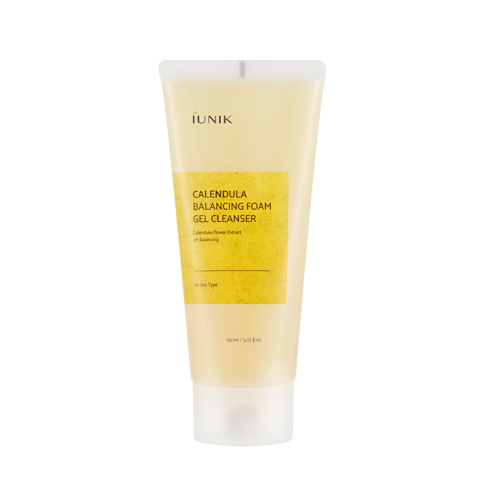
iUNIK
Calendula Balancing Foam Gel Cleanser

iUNIK
Calendula Complete Cleansing Oil

Arencia
Calendula Rice Mochi Cleanser

Farm Stay
Calendula Relief Cream
We match by ingredient mentions in product copy from our authentic retailers. If we missed a product you know contains calendula, let us know.
Related ingredients
Centella asiatica
aka Cica, tiger grass
The K-Beauty soothing standard — calms redness, speeds barrier recovery, and quiets reactive skin.
Beginner-safe
Mugwort
aka Artemisia
An old Korean medicinal herb now baked into ampoules — deeply calming for stressed, sensitive skin.
Beginner-safe
Panthenol
aka Pro-vitamin B5
Quiet workhorse — hydrates, soothes, and speeds the skin's recovery from almost anything.
Beginner-safe
Frequently asked
- What does Calendula do?
- A genuinely gentle, genuinely old botanical soother — and the one plant extract on this list with a real allergy caveat attached, because it is a daisy.
- Is Calendula good for beginners?
- Yes — Calendula is considered beginner-friendly in most K-beauty routines.
- Is Calendula safe for sensitive skin?
- Calendula is generally well-tolerated on sensitive skin.
- How do you use Calendula?
- Any step, any time, as often as you like. There is no tolerance to build, no frequency ceiling, no sun-sensitivity consequence and nothing to alternate it with — which is most of its appeal. It sits most naturally in the cleanse, toner or moisturiser step, and it is a good choice for the comfort layer on a night when you have overdone an acid or a retinoid. If you have any daisy-family allergy history, patch test properly before committing: a small amount on the inner forearm or behind the ear, repeated for several days, since contact sensitisation shows up on a delay rather than immediately. Two practical notes on buying. If the product is a flower oil rather than an extract, most of the bottle is carrier oil, so judge it as the oil it is. And do not pay treatment-serum prices for it — at CIR-documented use levels under 1%, a cleanser or a cream is the right place to meet this ingredient.