Hydration & barrier
Watermelon
also known as Citrullus lanatus, watermelon fruit extract, watermelon seed oil, subak, Kalahari melon oil
A pleasant, low-risk watery fruit extract with a marketing file far larger than its evidence file — and on this shelf, half the products wearing the name are a lip-tint shade or a US brand's branding, not a Korean formula.
What it is
Citrullus Lanatus (Watermelon) Fruit Extract is exactly what the name says: an extract of watermelon flesh, CAS 90244-99-8, from the gourd family alongside cucumber and melon. CosIng credits it with one function — skin conditioning — and that is the whole of the official job description. The fruit itself is roughly 92% water, with sugars, mineral salts, vitamins A, B, C and E, the amino acids citrulline and arginine, and carotenoids and phenolics including lycopene, the pigment that makes it red. As with most fruit words on a label, one term covers several different materials. The fruit extract and fruit juice are the watery ones. Citrullus lanatus seed oil is a different ingredient entirely — a light, linoleic-led pressed oil, the same material sold as Kalahari melon oil, and it behaves like an oil rather than like fruit juice. Rind extract is a third. And Lactobacillus/Watermelon Fruit Ferment Extract, which turns up in Glow Recipe's toner, is a ferment of the fruit rather than the fruit. If you are buying for a specific effect, the one you want is almost never specified on the front.
What it actually does
Honestly: it hydrates a little, it brings some antioxidant polyphenols along, and that is what is established. It is a watery, sugar-and-amino-acid-rich extract, so it holds a small amount of water at the surface the way most fruit and plant waters do, and the phenolics test as competent antioxidants in a dish. Everything past that gets thin fast. The UV and DNA-protection numbers that follow this ingredient around — in-vitro DNA protection, a 25% improvement over placebo — come from the ingredient supplier's own literature rather than independent published trials, and INCIDecoder flags them as manufacturer information. The only academic citation attached is a 2011 study on antioxidant compounds across watermelon cultivars, which is about the fruit in a lab, not about skin. The lycopene story is the one worth understanding properly, because it is the strongest-sounding and the most misleading: lycopene does have real human photoprotection data, including a double-blind placebo-controlled crossover trial in the British Journal of Dermatology and a meta-analysis of intervention trials — and all of it is oral supplementation. People ate it. None of it tested lycopene on skin, let alone watermelon extract on skin. Lycopene is also fat-soluble and lives in the red pigment, so a water-based fruit extract carries very little of it, and cosmetic extracts are frequently decolorised anyway. Same pattern with citrulline: the research is nutritional, the bioavailability work was done in an intestinal cell model, and watermelon rind actually carries more of it than the flesh. There are no human topical trials on watermelon extract worth leaning on. It is a nice supporting ingredient. It is not an active.
Why K-beauty uses it
This is the rare glossary entry where the honest answer is that the ingredient is not especially Korean. Watermelon — subak — is a beloved Korean summer fruit, eaten and drunk as subak-hwachae, but it is not a heritage skincare material in the way birch sap, mugwort, ginseng or dongbaek are; there is no long Korean tradition of putting it on your face. Its place in the K-beauty conversation comes almost entirely from one brand. Of the 30 products in this catalogue with watermelon in the name, 15 — exactly half — are Glow Recipe, a US brand founded by two Korean-American former Amorepacific executives that describes itself as Korean-inspired and built the Watermelon Glow line into the category's defining product. That is a real and interesting brand, and it is not the same thing as a Korean formulation tradition. Strip Glow Recipe out and what remains is mostly not skincare at all: colorgram, The Saem, fwee, Amuse and ETUDE use watermelon as a lip-tint shade name, and LANEIGE and The Face Shop as a lip-mask flavour. The actual Korean watermelon skincare on this shelf is three products — HEIMISH's Watermelon Moisture Soothing Gel Cream, beplain's VITA C Watermelon Serum, and an esfolio sheet mask. The sharpest number is the ingredient lists: of 563 products here with a published INCI, exactly one contains Citrullus lanatus. It is Arencia's PDRN Booster Shot, where it sits thirty-fourth of fifty-four, and the word watermelon appears nowhere on the front of it.
Best for
- Dehydrated skin that wants a light watery layer
- Sensitised skin looking for hydration without actives
- Toners, mists, gel creams and sheet masks
Not ideal for
- Anyone buying it as a brightening or anti-ageing active
- Anyone expecting the oral lycopene research to apply to a toner
- Anyone with a melon or ragweed-related food reaction who skips patch testing
- Anyone who wants the seed oil and is reading fruit-extract claims
Pairs well with
Niacinamide
pairs wellNothing reactive between them — and in the Dew Drops, niacinamide is the ingredient doing the work.
→ Any time.
BHA
pairs wellThey ship in the same bottle constantly. The watermelon will not clash with anything; the BHA is the part to pace.
→ Pace the acid, not the fruit.
PHA
pairs wellThe standard watermelon-toner pairing — gluconolactone does the exfoliating, the fruit extract softens the landing.
AHA (Glycolic & Lactic Acid)
pairs wellNo interaction with the fruit extract. Build up the acid slowly on its own terms.
Hyaluronic acid
pairs wellTwo humectants, and hyaluronic acid is much the stronger one. Routinely in the same formula.
→ On damp skin, then seal.
Vitamin C
pairs wellNo conflict. Watermelon's antioxidant contribution is minor next to vitamin C's, not additive to it.
Retinol
pairs wellA watery watermelon layer is a fine buffer on a retinol night.
Retinal
pairs wellSame as retinol — nothing to interact with, just hydration.
Centella asiatica
pairs wellTwo low-risk soothing botanicals, frequently stacked in the same toner.
Peptides
pairs wellNo clash — and in the Milk Peptide cushion, the peptides are the active and the watermelon is the name.
Use with care
Not "avoid at all costs" — most K-beauty routines get away with these combos by splitting AM/PM or alternating nights. The caution is about how you layer, not whether you use them.
Routine placement
- Where it lives
- Toner · Essence · Serum · Moisturizer · Mask
- AM/PM
- AM & PM
- Frequency
- As often as you like — it is not an active and there is nothing to build tolerance to
Pregnancy note: Considered suitable during pregnancy and nursing in topical cosmetic use. Check with your doctor about anything else in the formula.
How to use it
Wherever it turns up, which is early — a toner, an essence, a mist, a gel cream, a sheet mask. There is no technique, no ramp-up, no tolerance to build and no frequency ceiling, because it is not an active. Morning, night, both, as you like. The genuinely useful habit this ingredient teaches is to check what else is in the bottle, because the watermelon is almost never the part with a dose response. Glow Recipe's PHA + BHA Pore-Tight Toner is the clean example: watermelon fruit extract sits second of twenty-nine, which is a legitimately high inclusion and more than most fruit words earn — and the ingredients doing the exfoliating are gluconolactone at six and betaine salicylate at eight. Plan your routine around those two, not around the fruit. The same logic covers the rest of the line: the Dew Drops are a niacinamide serum, the Pink Dream body cream is an AHA, the Milk Peptide cushion is peptides. Read the second word on the box, not the first.
The Plug verdict
Watermelon is a fine ingredient with an enormous marketing shadow, and the gap between those two is where the money goes. What it reliably does is hold a little water and bring some antioxidant polyphenols; what it does not have is a single human topical trial worth citing. The lycopene evidence everyone gestures at is oral supplementation, and the water-based extract barely carries lycopene anyway. Three practical rules. One: work out which watermelon you are buying, because fruit extract, fruit ferment, rind extract and seed oil are four different materials. Two: in every watermelon product on this shelf, the second ingredient word is the one doing the work — PHA and BHA in the Pore-Tight Toner, niacinamide in the Dew Drops, AHA in the body cream. Buy it for that, and the fruit is a bonus. Three: half the watermelon in this catalogue is one Korean-inspired American brand and most of the rest is a lip-tint shade, so if you came here looking for a Korean heritage ingredient, this is not one. Buy a watermelon toner because you like the toner. It is a genuinely pleasant hydrating layer, and that is a real thing to want.
Products featuring watermelon
7 productsEditorially picked products where watermelon is the hero — ranked by real value across authentic retailers.
Products with watermelon
6 products
HEIMISH
Watermelon Moisture Soothing Gel Cream

Glow Recipe
Watermelon Glow AHA Pink Dream Body Cream

beplain
VITA C Watermelon Serum

esfolio
Pure Skin Watermelon Essence Mask Sheet

Glow Recipe
Watermelon Glow Hydrating & Soothing Jelly Sheet Mask
Glow Recipe
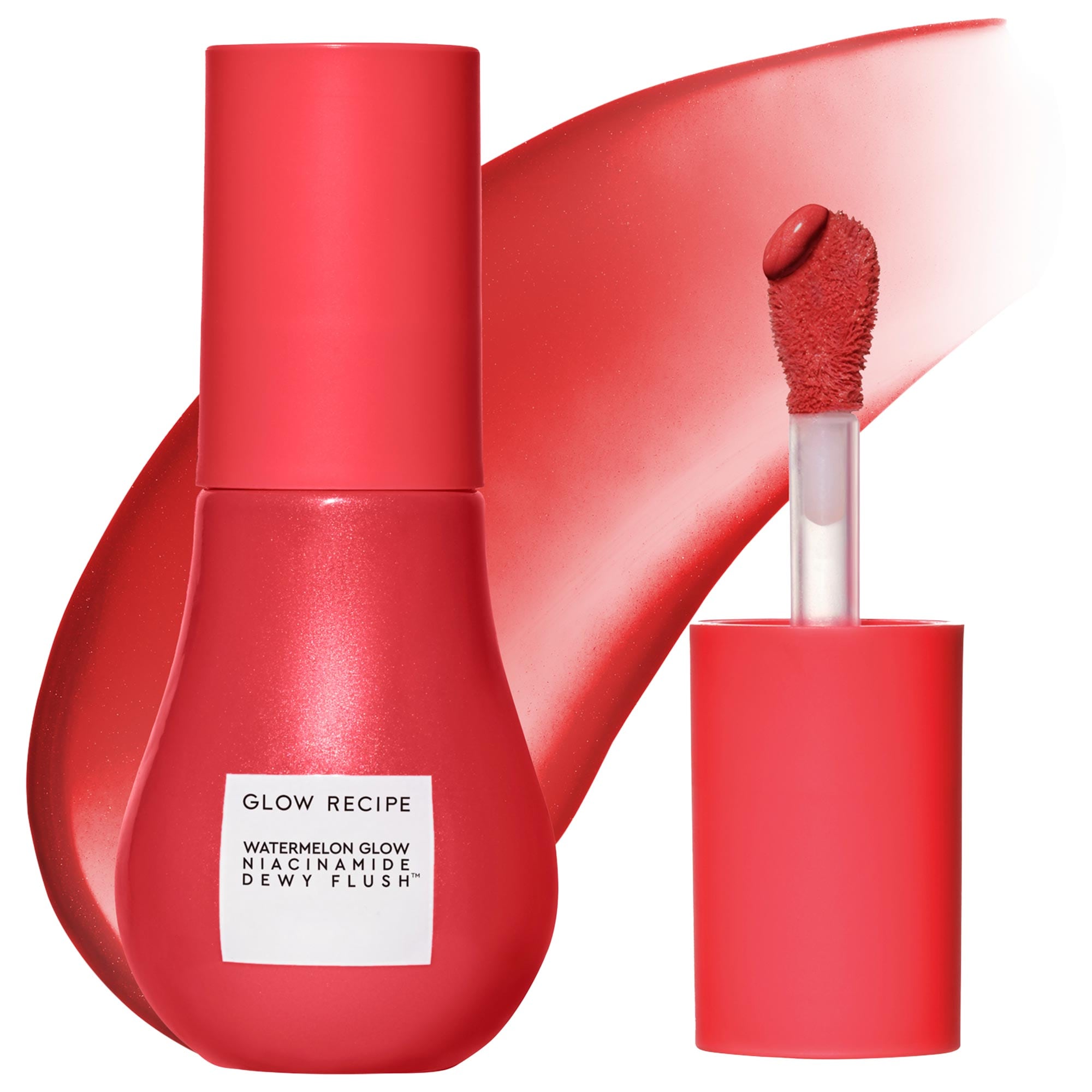
Watermelon Glow Niacinamide Dewy Flush - Brightening Serum Blush
We match by ingredient mentions in product copy from our authentic retailers. If we missed a product you know contains watermelon, let us know.
Related ingredients
Hyaluronic acid
aka Sodium hyaluronate
The water magnet — pulls moisture into the upper skin layers for instant plump.
Beginner-safe
Green Tea
aka Camellia sinensis
Antioxidant calm for oily and reactive skin — soothes redness and helps keep shine in check.
Beginner-safe
Bamboo
aka Bamboo water, bamboo sap, bamboo extract, black bamboo, Bambusa vulgaris, Phyllostachys
Usually the water your serum is made with, not the thing doing the work — and on this shelf the bamboo-branded products almost always name their real active somewhere else on the label.
Beginner-safe
Frequently asked
- What does Watermelon do?
- A pleasant, low-risk watery fruit extract with a marketing file far larger than its evidence file — and on this shelf, half the products wearing the name are a lip-tint shade or a US brand's branding, not a Korean formula.
- Is Watermelon good for beginners?
- Yes — Watermelon is considered beginner-friendly in most K-beauty routines.
- Is Watermelon safe for sensitive skin?
- Watermelon is generally well-tolerated on sensitive skin.
- How do you use Watermelon?
- Wherever it turns up, which is early — a toner, an essence, a mist, a gel cream, a sheet mask. There is no technique, no ramp-up, no tolerance to build and no frequency ceiling, because it is not an active. Morning, night, both, as you like. The genuinely useful habit this ingredient teaches is to check what else is in the bottle, because the watermelon is almost never the part with a dose response. Glow Recipe's PHA + BHA Pore-Tight Toner is the clean example: watermelon fruit extract sits second of twenty-nine, which is a legitimately high inclusion and more than most fruit words earn — and the ingredients doing the exfoliating are gluconolactone at six and betaine salicylate at eight. Plan your routine around those two, not around the fruit. The same logic covers the rest of the line: the Dew Drops are a niacinamide serum, the Pink Dream body cream is an AHA, the Milk Peptide cushion is peptides. Read the second word on the box, not the first.